Why the NBA In-Season Tournament is Not Like Soccer

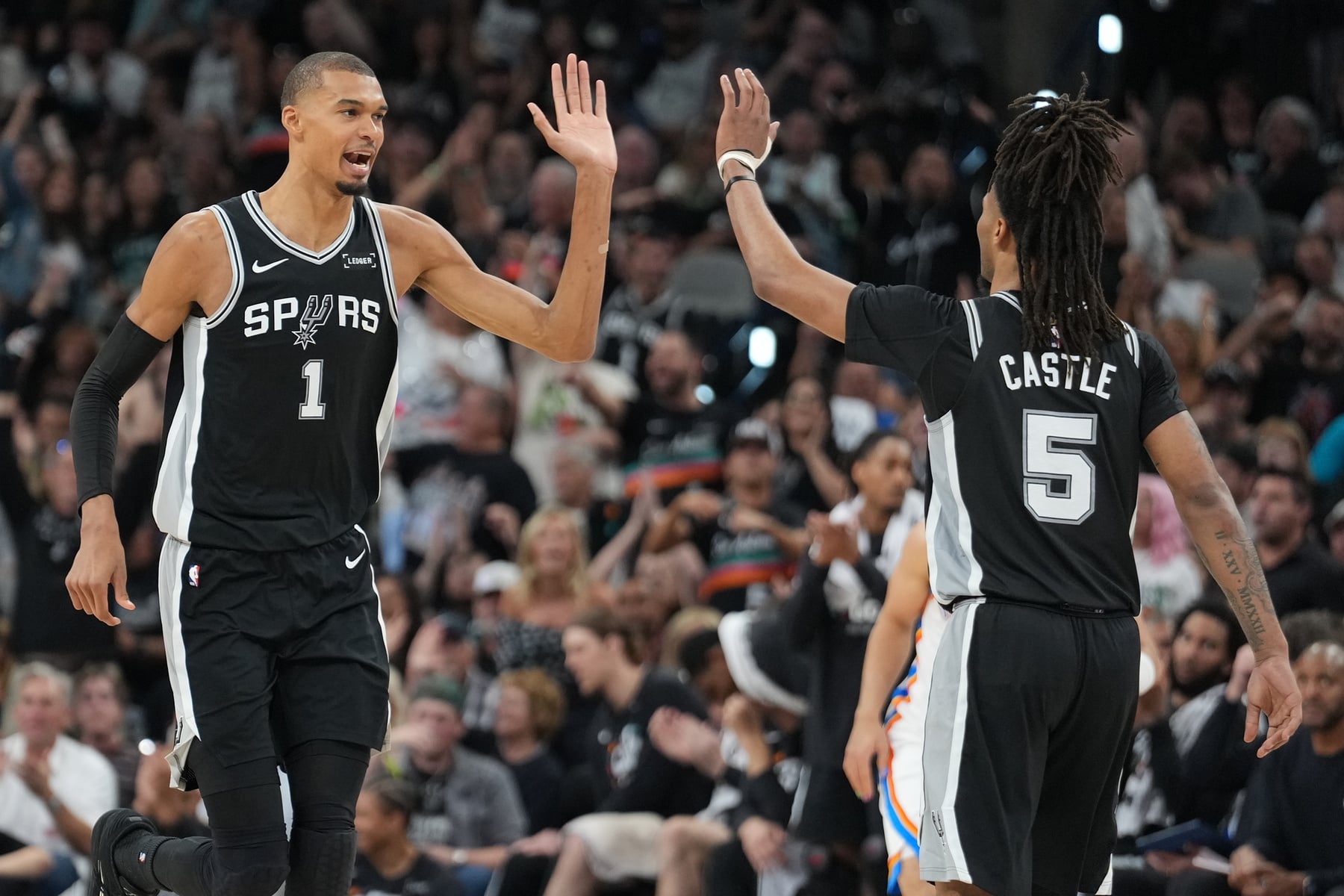
When the NBA announced earlier this year that it would sport a second trophy for teams to win via an In-Season Tournament, an argument was cited regularly in various online sports publications. It was said that the event is supposed to be like a soccer tournament where teams compete for a cup and that Commissioner Adam Silver has long wanted to implement it. It’s an interesting thought, but anyone who follows the beautiful game and has taken note of how the NBA’s tournament is structured can instantly tell that there are major loopholes in that defence.

Let’s explore.

While we’re at it, check out our NBA odds for plenty of basketball action.

The NBA In-Season Tournament

The contest began on Friday, November 3 and will last until Saturday, December 9 when the title bout is played on a neutral court in Las Vegas. Most know the drill by now, but for clarity’s sake, all 30 teams are separated into six groups, five per group and three groups per conference (East and West). There are four games played per team within a group, then the quarterfinals, semi-finals, and the big final. The bottom two sides of each group are bounced out if they don’t make it to the quarters. The two best second-place teams out of all six groups get to move on. Money and a handsome trophy are on the line.

These matches are mostly played on Tuesdays and Fridays, as was the case this past week. There are elections in the United States on November 7, hence no matches on that Tuesday in particular. The final is on a Saturday.

Soccer Cup Tournaments: Embarrassment of Riches

Where to begin? That’s not us being sarcastic. We’re asking ourselves that literally. Where should we begin?

First, which soccer tournament? At the international level, like the World Cup, Copa America, or Coupe Afrique des Nations, or domestic level, like the FA Cup, Copa Del Rey, and Copa Italia? There are hundreds of cup tournaments in the beautiful game, so saying the NBA In-Season event is “like a soccer tournament” isn’t very specific.

Nor is the argument entirely inaccurate. At the international level, there are group stage games, followed by single-elimination stages and an eventual cup final. In that sense, the NBA’s product is similar.

NBA In-Season Tournament and Soccer Cups: Who Plays

This is where elements diverge, even greatly in some respects.

To keep things simple, let’s compare with the English FA Cup, although most of what we’ll tackle applies to tournaments in other countries like Spain and Italy.

For one, the idea of the FA Cup is to give a chance, however slight, for all organized teams in England a chance to play in the same event and win it. Yes, all of them. The bigger FA Cup matches like the quarter-finals, semi-finals, and final at Wembley have hoopla because the Premier League clubs like Manchester United, Liverpool FC, and Arsenal typically dominate those latter stages. But the reality is that the tournament begins very early in the calendar with teams from much lower divisions (read: leagues) and with names and crests the casual soccer fan has never heard of.

That’s right. League Championship sides, League One, League Two, National League and more get to play in the FA Cup. Never heard of League Two? Don’t worry, most people haven’t. The point we’re making is that this English domestic title is technically open to any organized outfit.

In contrast, the NBA In-Season Tournament is open to, well, NBA teams. The same teams as usual. At its most basic level, it’s something the league is asking the same clubs with the same rosters to fight for while still keeping their eye on the usual business of the regular season. It’s an apples-to-oranges comparison.

NBA In-Season Tournament and Soccer Cups: Players and Schedule

Let’s stick with the topic of the players who engage in these cup competitions. One of the organic effects of the FA Cup is that when Premier League teams enter in January (top-flight teams have free passage into the third round), if they are drawn against lower-level sides, oftentimes the managers will have bench or lesser-used players starting games.

Why risk putting in the best player on a roster for a home date against a side that’s two leagues lower? Hence, players who often start league matches on the bench or are in the starting 11 less often will get their chance to shine.

None of that happened on Friday night when the inaugural In-Season Tournament matches were played. The differences were the courts and jerseys, some of which looked gaudy, to say the least. Zach Lavine, Giannis Antetokounmpo, Luka Doncic, Nikola Jokic, Jimmy Butler and a host of stars all played significant minutes. The NBA needs to sell this new product. Clubs aren’t going to put in G-League names or have the entire five-man starting roster comprised of players who typically put in 5-to-10 minutes during regular season contests. But again, the charm of FA Cup matches differs. The roster juggling exercised by managers is part of what makes it interesting.

The other element to discuss is scheduling. What the NBA is doing makes sense. For example, teams that don’t make it out of the group stage after the four scheduled matches will play each other to make up for a couple of regular season games that they’d otherwise miss.

One more, soccer tournaments and how the leagues are affected is a different beast. Premier League teams play 38 games. The FA Cup carries little bearing on those League matches. The opponents and dates are set at the start of the year. Sometimes if a club gets to the quarter-final or semi-final, a League game can be re-scheduled to the middle of the week, but that’s as dramatic as the adjustments get. The FA Cup starts in August and concludes in June at Wembley Stadium. The Premier League has its own business, schedule, and problems to mind.

NBA In-Season Tournament and Soccer Cups: Prestige

Prestige. This is the least fair of the counter-points because the NBA In-Season Tournament hasn’t had its chance yet. For all we know fans, players, and owners will love it and a brilliant new tradition will be born.

But’s going to require work and patience. The very first FA Cup was played in 1871, over 150 years ago. It was at the behest of the Football Association who, after establishing some ground rules for all the soccer leagues in England, thought it would be a good idea to have a cup competition in which everyone could play, irrespective of their level in the nation.

Reports have established that one of the driving forces behind the creation of the In-Season Tournament is to generate more revenue given that the league is facing new media deal negotiations after the 2024-2025 season. Only the most naïve person wouldn’t guess that money had something to do with it, but this is not a very romantic way to start a tradition. Word on the street is that interest in the NBA dips after the hoopla of opening week, hence why the tournament is a November and early December affair. This league believes this is a necessity.

If it proves successful, then great. The NBA  has earned an enviable reputation and popularity and deserves nothing but the best. But the NBA In-Season Tournament is not like a soccer cup competition. It’s far too commercial, even knowing that what professional enterprises do is always commercial to a degree. Its structure is also very different from what a soccer competition is like.

The argument of trying to emulate that tradition sounds like what someone would say if they were vaguely aware that soccer teams play multiple competitions and wanted to implement that in a setting where it’s never been done and tried fitting a square block into a triangular hole.

Other Articles