
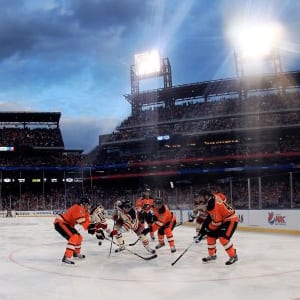
Kings and Ducks to Play NHL Game at Dodger Stadium
-
Dale Perth

Pro hockey will make history next January 25th as the L.A. Kings and their crosstown rivals, the Anaheim Ducks, will play the NHL’s first ever regular-season outdoor game west of the Mississippi River. It’s one of six slated for what is now being called the “Stadium Series.”
Yes, it looks like the setup to a joke, but it’s no laughing matter: the league confirmed on Monday that the game will take place at the normally baseball-specific Dodger Stadium, which has until now (understandably) never before hosted a hockey game. The most intriguing aspect of this, of course, is how they expect to pull this off: maintaining the integrity of a sheet of ice amid the palm trees in Southern California, even if it takes place in one of the coldest months and even if the puck drops after sunset, seems crazy on the face of it. That’s where modern technology steps up.
A multimillion-dollar ice-making system will be brought to the stadium located at Chavez Ravine, and the setup features a 300-panel surface upon which the ice sheet will rest. Cold water will be flowed through the panels at a rate of 1,500 gallons per minute to keep a steady temperature and (ideally) preserve the density of the ice. The scheme will also use a tracking system called Eye On the Ice which is touted to help detect changes in the ice surface.
That kind of tech could have come in handy when the NHL previously played an exhibition game between the Kings and the New York Rangers in the parking lot of Caesars Palace in Las Vegas in September 1991. Back then, all they had was a protective tarp to help preserve the ice; when it was removed, some pieces stuck to the surface and created ruts. It also didn’t help that the lights attracted a swarm of crickets.
Nevertheless, that game went ahead. After the Rangers went up 2-0, the Kings stormed back with five unanswered goals to win by a final score of 5-2 in a game which reunited Wayne Gretzky and Jari Kurri. As the commentators pointed out, the temperature at game time that night was 85 degrees Fahrenheit (almost 29.4 degrees Celsius); the average daytime temperature in January in Los Angeles is a comparatively cool 68 degrees F (20 degrees C), so if the ice-making system operates properly — and if no hordes of flying or hopping insects decide to pay a visit to see what all the fuss is about — this idea won’t be as nutty as it appears to be at first blush.